
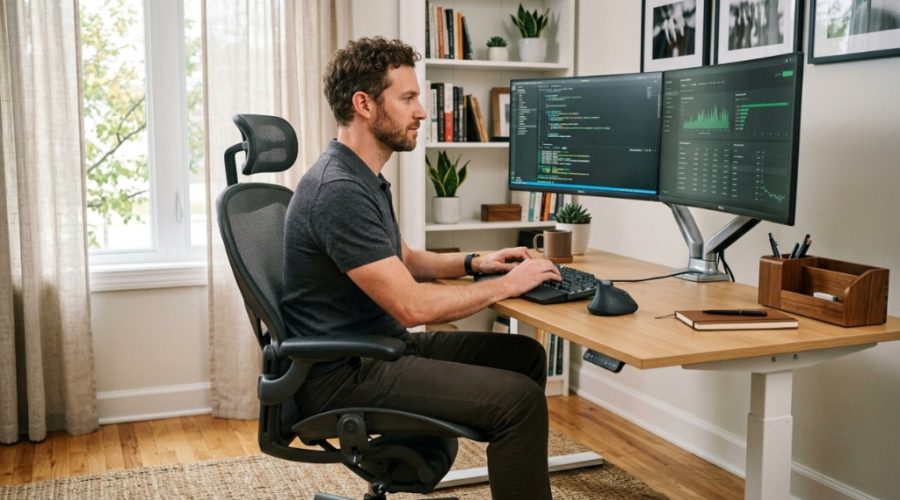
If you’re spending eight, ten, or even twelve hours a day at a desk in Washington, you already know the toll a poor chair can take. That dull ache in your lower back, the stiffness in your shoulders, the constant shifting to find a comfortable position—these are not just minor annoyances. They are signals that your seating setup is failing you. Finding the right ergonomic chair for long work hours WA professionals actually need isn’t about picking the most expensive model; it’s about understanding your body’s specific requirements and the features that genuinely provide relief. This guide cuts through the marketing noise to give you a practical framework for choosing a chair that supports your health and productivity, ensuring you can focus on your work instead of your discomfort.
Key Takeaways
- Lumbar support is non-negotiable: Look for adjustable lumbar support that sits in the natural curve of your lower spine, not a fixed bump that forces an unnatural posture.
- Seat depth matters more than you think: You should be able to fit two to three fingers between the back of your knees and the edge of the seat pan; this prevents circulation issues and pressure on the backs of your thighs.
- Adjustability is the currency of comfort: A chair that adjusts in seat height, armrest height, armrest width, backrest angle, and tension is a better long-term investment than a “one-size-fits-all” model.
- Consider Washington’s specific climate: Breathable mesh or fabric materials are often better choices than leather for year-round comfort in the Pacific Northwest’s variable temperatures.
- Test before you invest, or buy with a solid return policy: Your body is unique, so a chair that works for a colleague might not work for you. A robust trial period is a critical safety net.
Why Your Current Chair Is Probably Causing Your Pain
Sitting for prolonged periods is not inherently bad, but sitting in a static, poorly designed chair is. A standard office chair usually forces your body into a fixed posture, which reduces blood flow, puts pressure on the intervertebral discs, and causes muscles to fatigue as they fight to hold you upright. This is why you feel exhausted even on days you didn’t do much physical labor. The chair you sit in all day either works with your body’s natural alignment or against it.
You need a chair that promotes dynamic sitting—allowing your body to move naturally throughout the day without you having to consciously think about it. This is where a truly ergonomic design comes into play. It’s about finding a tool that adapts to you, providing support where your body needs it most, whether you’re leaning in to type, reclining to read, or sitting upright in a meeting. If you’re ready to move beyond the pain and find a solution tailored to your needs, exploring a top-rated ergonomic chair long work hours WA is your first strategic step toward lasting comfort.
The 5 Non-Negotiable Ergonomic Adjustments
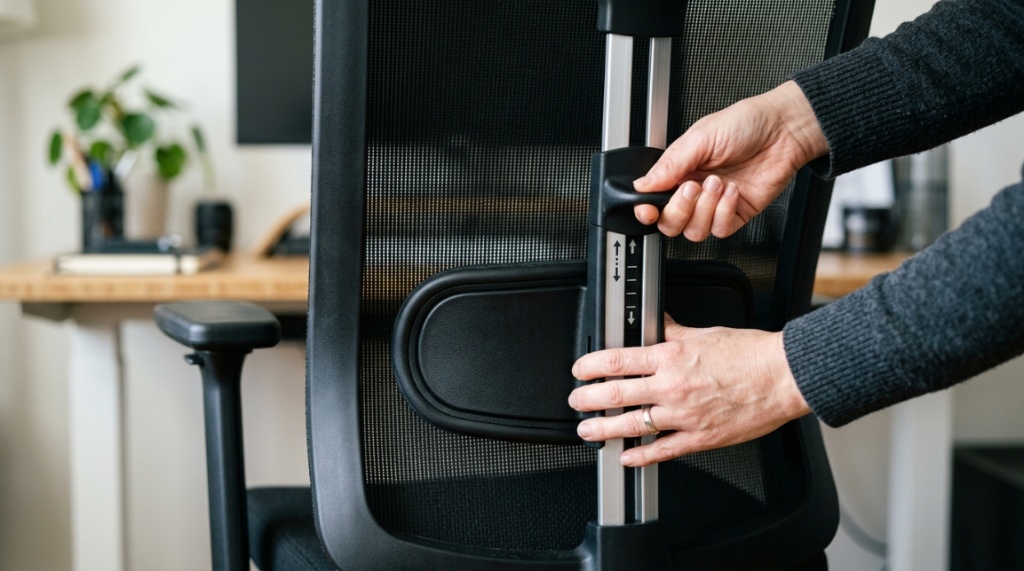
To avoid wasting money on a chair that doesn’t solve your problems, you need to know exactly what to look for. Not all chairs marketed as “ergonomic” are created equal. Here are the five most critical adjustment points to verify before you buy.
Adjustable Seat Height
This is the most basic yet essential adjustment. Your feet should rest flat on the floor with your knees bent at a 90-degree angle. If the seat is too high, pressure builds on the backs of your thighs. If it’s too low, you’ll slouch and put pressure on your tailbone. Check the cylinder’s lift range to ensure it fits your height. For most people, that’s between 16 to 21 inches from the floor to the seat pan.
Lumbar Support That Actually Moves
Everyone’s spine has a natural inward curve in the lower back. A good ergonomic chair will have a lumbar support that not only adjusts in height but also in depth. It should press gently but firmly into the curve of your lower back, giving you the support you need to maintain that natural alignment. A non-adjustable “lumbar bump” is usually in the wrong place and can cause more harm than good.
Seat Depth (Slide or Sliding Pan)
The seat pan should be long enough to support your thighs without pressing into the back of your knees. As a quick rule of thumb, there should be about two to three finger-widths of space between the edge of the seat and the back of your knee. A sliding seat pan is a feature you should not compromise on, as it ensures your legs are fully supported regardless of your height.
Armrest Adjustments (Height and Width)
Your arms should rest comfortably at your sides with your elbows at a 90-degree angle, and your wrists should be in a neutral, straight position while typing. Adjustable armrests are vital to prevent shoulder shrugging. You also want to adjust the width so the armrests are close to your body for support without spreading your arms too wide. If you can’t adjust the armrests, consider whether you actually need them at all—some people prefer to have none and rest their arms on their desk.
Backrest Angle and Tension
Look for a backrest that reclines and locks in various positions. More importantly, check the tension control. This determines how much resistance there is when you lean back. You want to be able to recline gently with minimal effort, which allows you to shift your posture and take pressure off your spine. A chair that is too stiff or too floppy will not provide adequate support.
Mesh vs. Fabric vs. Leather: What Works Best in WA
The Pacific Northwest’s climate is a defining factor in material choice. We see everything from hot, sunny days to damp, chilly ones, and of course, the ever-present rain. The material of your chair plays a huge role in your comfort level.
Mesh: This is a fantastic year-round option for Washington. It is breathable, preventing that sticky, sweaty feel during the warmer months. During cooler months, it doesn’t feel icy cold when you first sit down. High-quality mesh also offers a flexible, supportive “hammock” effect that conforms to your body’s shape. The downside is that some cheap mesh can sag over time and lose its support.
Fabric: A padded upholstery fabric offers a soft, comfortable, and breathable feel. It’s a great choice for those who want a plush, cozy experience. The key is to look for a durable, stain-resistant weave that can withstand heavy daily use. It may retain a bit more heat than mesh, but it’s often more comfortable for longer durations in air-conditioned offices.
Leather (or PU Leather): While it looks premium and is easy to wipe clean, genuine or bonded leather has some significant drawbacks for all-day sitting. It is not breathable, trapping heat and becoming sticky in the summer. In the winter, it can be cold and uncomfortable. It also requires more maintenance to prevent cracking. Unless you are going for a purely aesthetic look in an executive office, this is often the least practical choice for long work hours.
Matching a Chair to Your Body Shape and Size
Ergonomics is not about a standard shape; it’s about fitting the individual. A chair that fits a 6’2″ person will not fit a 5’2″ person. That’s why it’s important to understand the different size categories.
For Petite and Smaller Frames: Look for chairs specifically designed for smaller bodies. These will have a shorter seat depth, a smaller backrest, and a lighter tension mechanism. A chair that is too large can cause you to perch on the edge or force you to over-extend your arms to reach the armrests.
For Taller and Larger Frames: You will need a chair with a taller backrest and a longer seat pan. Look for a higher weight capacity and a larger, more robust cylinder. The lumbar support needs to be positioned correctly for your spine, which may require a chair with more vertical adjustment range.
For Those with Specific Pain Points: If you suffer from lower back pain, invest heavily in a chair with superior lumbar support. If you have neck or shoulder pain, a chair with an adjustable headrest might be necessary, even if you don’t think you’ll use it. You can also explore chairs with a forward-tilt feature if you lean over your desk to work, as this keeps your spine aligned in a “sled” position.
Washington-Specific Regulations and Compliance
For employers in Washington State, it’s important to note that ergonomic checks are often a part of workplace safety. While Washington has stepped back from the strict ergonomic rule of the past, general safety obligations under WISHA (Washington Industrial Safety and Health Act) still apply to prevent “work-related musculoskeletal disorders.” This means that providing a supportive, adjustable chair is not just a nice-to-have; it is a part of a compliant and responsible workplace. For employees, understanding your rights can help you request equipment—like an ergonomic chair—that aligns with musculoskeletal health best practices without fear of pushback.
Knowing When It’s Time to Replace Your Chair
A good ergonomic chair is an investment, but it won’t last forever. Even the best chairs will eventually lose their structural integrity. Here are a few signs that your chair has reached the end of its usable life and is contributing to your discomfort rather than alleviating it:
- The gas lift no longer holds: If you sink slowly as you sit, the cylinder is failing.
- Lumbar support is worn out: If the lumbar support feels flimsy, doesn’t hold its position, or no longer presses into your back as it should.
- Floor base is cracked: This is a significant safety hazard and needs immediate attention.
- You are experiencing new aches and pains: If you’ve recently started feeling different discomforts that you didn’t before, it might be that your body is overcompensating for a worn-out chair.
- Fabric is worn and the foam is flat: If you can feel the hard frame of the seat pan through the cushion, it’s time to look for a new chair.
Frequently Asked Questions
What is the difference between a task chair and an ergonomic chair?
A basic task chair is designed for simple, short-duration sitting and typically allows only for seat height adjustment. An ergonomic chair is specifically engineered to support the body’s natural posture through a wide range of adjustments, including lumbar, armrest, seat depth, and tilt tension, making it suitable for prolonged periods of sitting.
Can an ergonomic chair help with lower back pain?
Yes. An ergonomic chair with adjustable lumbar support helps maintain the natural inward curve of your lower spine, which reduces pressure on the intervertebral discs and eases muscle strain. This can significantly prevent or alleviate lower back pain caused by prolonged static sitting.
Is it worth buying a used ergonomic chair?
It can be a good deal, but you must be cautious. Inspect the gas lift, air cylinder, and foam density carefully. Since the mechanism wears with use, a heavily used chair may lose its tension and lift capacity, requiring you to replace functional parts sooner than you would with a new model.
How often should I adjust my chair during the day?
You should adjust your chair whenever you feel discomfort. As a rule of thumb, change your sitting position every 30-45 minutes, and consider adjusting the backrest recline or seat position to promote micro-movements. Your body is not designed for static posture, so even a great chair shouldn’t be left in one position all day.
Does a headrest matter in an office chair?
It depends on your work style. If you frequently lean back to read, talk on the phone, or take breaks, a headrest is extremely helpful to support your neck and prevent “text neck” strain. If you spend most of your time leaning forward typing, it is less critical, but it can still support you during rest periods.
Conclusion
Selecting the right ergonomic chair for long work hours in WA is a deeply personal decision. It requires a clear-eyed assessment of your body type, your daily tasks, and the unique environmental factors of the Pacific Northwest. By prioritizing non-negotiable adjustments like seat depth and lumbar support, choosing breathable materials, and understanding the differences in chair sizes, you equip yourself to make a choice that pays dividends in health and productivity. This isn’t just about buying furniture; it’s about investing in your long-term well-being so you can work comfortably and return to the things you love, pain-free.