

Growing a business without seeking investors or loans presents unique challenges and opportunities. Many entrepreneurs successfully expand their operations using internal resources and strategic planning. This approach maintains complete ownership control while building sustainable growth foundations.
Bootstrapping expansion requires disciplined financial management and creative problem-solving. However, businesses avoiding external funding often develop stronger operational efficiency and profitability. This guide explores proven strategies for expanding your business using existing resources.
Analyzing Your Current Financial Position
Understanding your financial reality forms the foundation of self-funded expansion. Review profit margins, cash flow patterns, and working capital availability. These metrics reveal how much capital you can realistically allocate toward growth initiatives.
Calculate your monthly recurring revenue and identify seasonal fluctuations. Consistent cash flow enables predictable expansion investments. Additionally, examine your operating expenses to find areas where efficiency improvements could free up capital.
Create detailed financial projections for the next 12 to 24 months. Conservative estimates prevent overextension during expansion phases. Therefore, build contingency reserves covering at least three months of operating expenses before committing to growth investments.
Assess your current debt obligations and their impact on available capital. Businesses carrying heavy debt loads should prioritize reduction before expansion. Moreover, strong credit management improves future flexibility without requiring external funding.
Maximizing Profitability Before Scaling
Profitable operations generate the capital needed for self-funded expansion. Analyze your pricing strategy to ensure healthy margins supporting growth. Many businesses undercharge for their products or services, leaving money on the table.
Review your cost structure systematically. Negotiate better terms with suppliers using your established relationship and payment history. Additionally, examine operational processes for waste, redundancy, and inefficiency requiring correction.
Focus on your highest-margin products or services. Shifting resources toward profitable offerings accelerates capital accumulation. However, maintain customer satisfaction by managing this transition thoughtfully.
Implement systems reducing operational costs without sacrificing quality. Automation tools, improved workflows, and strategic outsourcing often deliver significant savings. Therefore, invest in efficiency improvements that pay for themselves quickly through reduced expenses.
Building an Incremental Expansion Plan
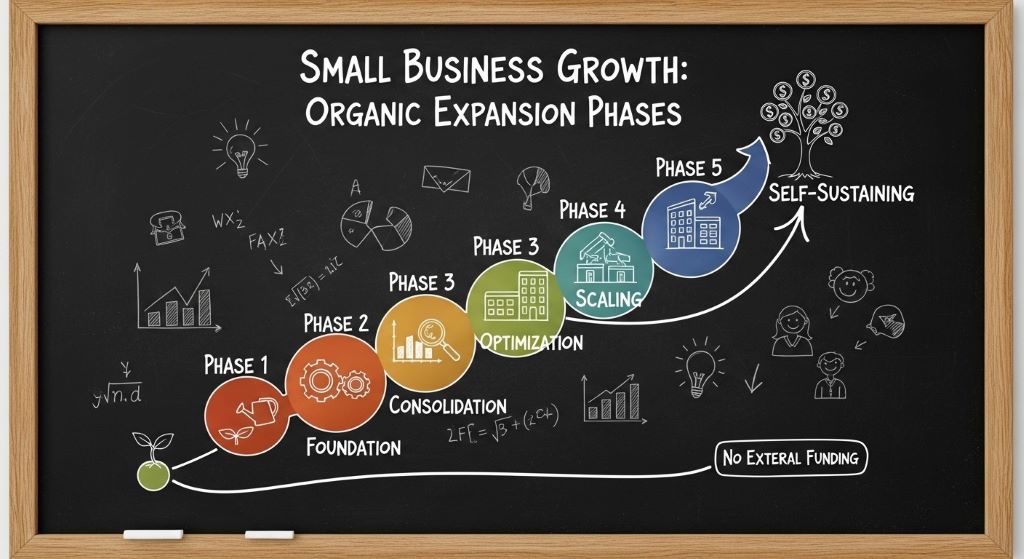
Self-funded growth requires patience and strategic sequencing. Break large expansion goals into smaller, manageable phases. Each phase should generate returns funding the next stage.
Prioritize expansion opportunities offering quickest returns on investment. Low-hanging fruit provides capital for more ambitious projects. Additionally, early wins build momentum and validate your expansion strategy.
Create specific milestones with measurable outcomes for each expansion phase. Clear metrics help you evaluate progress and adjust strategies as needed. Moreover, documented milestones provide accountability preventing scope creep and overextension.
Plan contingencies for each expansion phase. Market conditions change, and flexible strategies accommodate unexpected challenges. However, avoid abandoning plans at the first obstacle. Persistence balanced with adaptability drives successful bootstrapped expansion.
Leveraging Existing Customer Relationships
Current customers represent your most valuable expansion resource. Increasing average transaction value requires less investment than acquiring new customers. Therefore, develop strategies encouraging existing customers to buy more frequently or in larger quantities.
Introduce complementary products or services your customers already need. Cross-selling leverages established trust and reduces marketing costs. Additionally, bundling offerings creates value while increasing transaction sizes.
Implement customer loyalty programs rewarding repeat business. Simple point systems or tiered benefits cost little to operate but encourage continued patronage. Moreover, loyal customers provide referrals expanding your market reach organically.
According to Harvard Business Review, acquiring new customers costs five to 25 times more than retaining existing ones, making customer retention a critical expansion strategy.
Gather feedback from your best customers about potential new offerings. Their insights reveal market opportunities requiring minimal research investment. Furthermore, pre-selling to interested customers reduces expansion risk significantly.
Optimizing Your Marketing Return on Investment
Strategic marketing drives expansion without requiring large budgets. Focus on channels delivering measurable results and positive return on investment. Track every marketing dollar to identify what works and eliminate what doesn’t.
Content marketing builds authority and attracts customers over time with minimal ongoing costs. Blog posts, videos, and social media content continue generating leads long after creation. However, consistency matters more than production quality when starting.
Email marketing delivers exceptional returns for established businesses. Your existing subscriber list represents owned media requiring no advertising spend. Additionally, segmented email campaigns allow personalized messaging improving conversion rates.
Strategic partnerships with complementary businesses expand reach without advertising costs. Cross-promotions, joint ventures, and referral agreements create win-win relationships. Therefore, identify potential partners serving your target audience with non-competing offerings.
Encourage user-generated content and customer testimonials. Authentic reviews and social proof convert prospects better than paid advertising. Moreover, satisfied customers often share experiences voluntarily when asked.
Implementing Strategic Pricing Adjustments
Pricing directly impacts capital available for expansion. Small price increases on existing offerings can generate significant additional revenue. However, communicate added value justifying adjustments to maintain customer satisfaction.
Introduce premium tiers or upgraded versions of current products. Customers seeking enhanced features willingly pay more, improving margins without losing price-sensitive buyers. Additionally, tiered pricing segments your market effectively.
Test different pricing models to optimize revenue. Subscription models create predictable recurring revenue supporting expansion planning. Meanwhile, value-based pricing captures more profit from customers receiving exceptional results.
Consider strategic bundling combining products or services at attractive price points. Bundles increase transaction values while delivering customer savings. Therefore, both parties benefit from thoughtfully constructed package offerings.
Reinvesting Profits Strategically
Disciplined profit reinvestment fuels sustainable expansion without external funding. Establish clear guidelines for how much profit flows back into growth initiatives. Many successful bootstrapped businesses reinvest 50 to 70 percent of profits during expansion phases.
Prioritize investments generating measurable returns within 12 months. Quick payback periods compound growth faster than long-term projects. Additionally, short-term wins provide confidence and validation for your expansion strategy.
Balance growth investments with reasonable owner compensation. Underpaying yourself creates burnout and resentment. However, excessive draws slow expansion unnecessarily. Therefore, establish fair compensation supporting both personal needs and business growth.
Create separate accounts for operating expenses, taxes, and expansion capital. This separation prevents accidentally spending growth funds on operations. Moreover, visual separation reinforces financial discipline.
Developing Operational Efficiency
Efficiency improvements free capital for expansion without reducing quality. Map your key business processes identifying bottlenecks and redundancies. Streamlined operations reduce costs while improving customer experiences.
Invest in technology automating repetitive tasks. Customer relationship management systems, accounting software, and project management tools pay for themselves through time savings. Additionally, automation reduces errors and improves consistency.
Cross-train employees to handle multiple functions. Versatile team members provide flexibility during expansion without requiring additional hires. However, ensure cross-training doesn’t compromise specialized expertise needed for quality.
According to Forbes, businesses successfully scaling without funding focus intensely on operational excellence and customer lifetime value.
Outsource non-core functions to specialists when cost-effective. Virtual assistants, freelance designers, and contract accountants provide expertise without full-time salary commitments. Therefore, you pay only for services actually needed.
Exploring Revenue-Based Expansion Models
Some expansion strategies generate revenue before requiring significant investment. Service businesses can often expand offerings with minimal upfront costs. New service lines leverage existing expertise and infrastructure.
Pre-selling products or services funds development without external capital. Crowdfunding platforms, advance orders, and deposit systems provide working capital from customers. Additionally, pre-sales validate market demand before full commitment.
Licensing or franchising allows expansion through other people’s capital and effort. You provide systems and branding while partners invest in execution. However, maintaining quality control across licensed operations requires careful planning.
Partnership models sharing profits and risks enable expansion beyond your individual capacity. Joint ventures with complementary businesses pool resources and expertise. Moreover, partnerships often access markets difficult to enter independently.
Managing Cash Flow During Expansion
Cash flow management becomes critical during self-funded expansion. Growth often requires upfront investments before generating returns. Therefore, maintain adequate working capital preventing operational disruptions.
Negotiate favorable payment terms with suppliers extending your cash runway. Net 30 or net 60 terms preserve capital for growth investments. Additionally, early payment discounts sometimes justify using available cash strategically.
Accelerate receivables collection through incentives for prompt payment. Small discounts for early payment improve cash flow substantially. However, ensure discount terms don’t eliminate your profit margins.
Consider inventory management strategies like just-in-time ordering. Reducing inventory carrying costs frees capital for expansion. Moreover, lower inventory reduces waste from obsolescence and damage.
Building Strategic Alliances and Partnerships
Collaboration enables expansion beyond individual resources. Identify businesses serving similar customers with complementary offerings. Strategic alliances create mutual benefits without requiring capital investment.
Referral partnerships generate new business through trusted recommendations. Formalize arrangements ensuring both parties benefit fairly from exchanges. Additionally, document expectations preventing misunderstandings.
Co-marketing arrangements split advertising costs while reaching larger audiences. Joint webinars, shared booth spaces, and collaborative content reduce individual marketing expenses. Therefore, both partners achieve greater impact than solo efforts.
Supplier partnerships sometimes provide extended terms, consignment arrangements, or shared marketing support. Strong supplier relationships built on consistent business create negotiating leverage. Moreover, suppliers often prefer supporting growing customers.
Measuring and Adjusting Your Expansion Strategy
Regular performance monitoring keeps expansion on track. Establish key performance indicators measuring progress toward expansion goals. Review these metrics monthly to identify problems early.
Compare actual results against projections identifying variances. Understanding why performance differs from expectations informs strategy adjustments. Additionally, variance analysis reveals hidden opportunities or threats.
Remain flexible adjusting strategies based on market feedback and results. Successful bootstrapped expansion requires responsiveness to changing conditions. However, distinguish between temporary setbacks and fundamental strategy flaws.
Celebrate milestones and learn from setbacks. Documenting lessons learned improves future decision-making. Therefore, treat expansion as an ongoing learning process rather than a fixed plan.
Conclusion
Developing a business expansion strategy without external funding requires disciplined financial management, strategic planning, and patient execution. Successful self-funded growth builds on strong profitability, maximizes existing customer relationships, and implements incremental expansion phases. By optimizing operations, reinvesting profits strategically, and maintaining careful cash flow management, businesses can scale sustainably while retaining complete ownership control. Therefore, entrepreneurs choosing bootstrapped expansion develop resilient, efficient organizations positioned for long-term success. The journey demands persistence and creativity, but the rewards include independence, stronger fundamentals, and lasting competitive advantages.
Frequently Asked Questions
How long does self-funded business expansion typically take?
Self-funded expansion generally takes two to five years depending on industry, profit margins, and growth ambitions. Patient, incremental growth builds sustainable foundations. Rushing expansion without adequate capital creates unnecessary risk and potential failure.
What profit margin do I need to fund expansion internally?
Businesses should target at least 15 to 20 percent net profit margins for comfortable self-funded expansion. Lower margins require longer timelines or more aggressive cost reduction. Additionally, higher margins accelerate expansion timelines significantly.
Should I expand geographically or add new products first?
Most businesses should perfect new offerings in existing markets before geographic expansion. This approach reduces complexity and risk while building proof of concept. However, businesses with location-dependent models may prioritize geographic growth.
Can service businesses expand without external funding more easily than product businesses?
Yes, service businesses typically require less capital for expansion than product-based companies. Services avoid inventory costs, manufacturing equipment, and supply chain complexity. Therefore, service businesses often scale faster using internal resources alone.
How do I know when my business is ready for expansion?
Your business is ready for expansion when you maintain consistent profitability, have strong cash reserves, possess documented systems, and can delegate effectively. Additionally, verified market demand for expansion offerings reduces risk significantly.
Related Topics:
How to Scale a SaaS Business: Proven Strategies for Explosive Growth and Beyond
Zero Marketing Budget: Strategies for Business Growth Without Spending a Dime