

On a busy Monday morning, a café owner discovered that a refrigerator door had been left slightly open overnight. By sunrise, hundreds of dollars’ worth of milk, produce, and prepared ingredients were unusable. That single oversight highlights why the best refrigerator features small business owners should look for are not luxury extras—they are essential tools that protect inventory, reduce operating costs, and keep daily operations running smoothly. Whether you manage an office, retail store, salon, café, clinic, or startup workspace, choosing the right refrigerator directly impacts efficiency, energy consumption, food safety, and employee convenience.
A business refrigerator is more than a cooling appliance. It is part of a company’s operational infrastructure. Poor cooling performance, inefficient energy use, and limited storage can lead to higher expenses, wasted products, and workflow disruptions. Modern office cooling solutions now include smart monitoring, energy-efficient compressors, adjustable storage systems, and advanced temperature controls designed specifically for business environments.
This guide explains exactly which refrigerator features matter most for small businesses, how they affect long-term costs, and what buyers should evaluate before making an investment in business appliances.
What Refrigerator Features Matter Most for Small Business Owners?
The most important refrigerator features for small businesses are energy efficiency, temperature consistency, storage flexibility, durability, and smart monitoring capabilities.
While appearance matters, functionality determines long-term value. Small businesses often operate on tight margins, making reliability and operating costs critical purchasing factors. A refrigerator that consumes less electricity and maintains stable temperatures can save money every month while protecting valuable inventory.
Business owners evaluating growth opportunities often focus on operational efficiency, similar to how entrepreneurs optimize recurring revenue models through a scalable subscription-based business strategy. The same principle applies when investing in equipment that supports sustainable long-term performance.
- Energy-efficient operation
- Reliable temperature management
- Adequate storage capacity
- Durable construction materials
- Easy maintenance requirements
- Low operating costs
- Advanced monitoring systems
- Employee-friendly organization
Choosing appliances based on these criteria can significantly improve operational efficiency while minimizing unexpected expenses.
Why Is Energy Efficiency One of the Most Important Refrigerator Features?
Energy-efficient refrigerators reduce electricity costs and provide long-term savings without sacrificing cooling performance.
Commercial and office refrigerators operate continuously, making energy consumption a major factor in total ownership costs. According to energy industry estimates, refrigeration equipment can account for a substantial percentage of electricity usage in businesses that store food, beverages, pharmaceuticals, or temperature-sensitive products.
Look for:
- ENERGY STAR certification
- High-efficiency compressors
- LED interior lighting
- Improved insulation technology
- Eco-friendly refrigerants
- Variable-speed compressor systems
Modern compressor technology adjusts cooling output based on demand instead of running continuously at full capacity. This improves efficiency and extends component lifespan.
For businesses seeking dependable office cooling solutions, energy-efficient models often deliver lower lifetime costs despite a higher upfront purchase price.
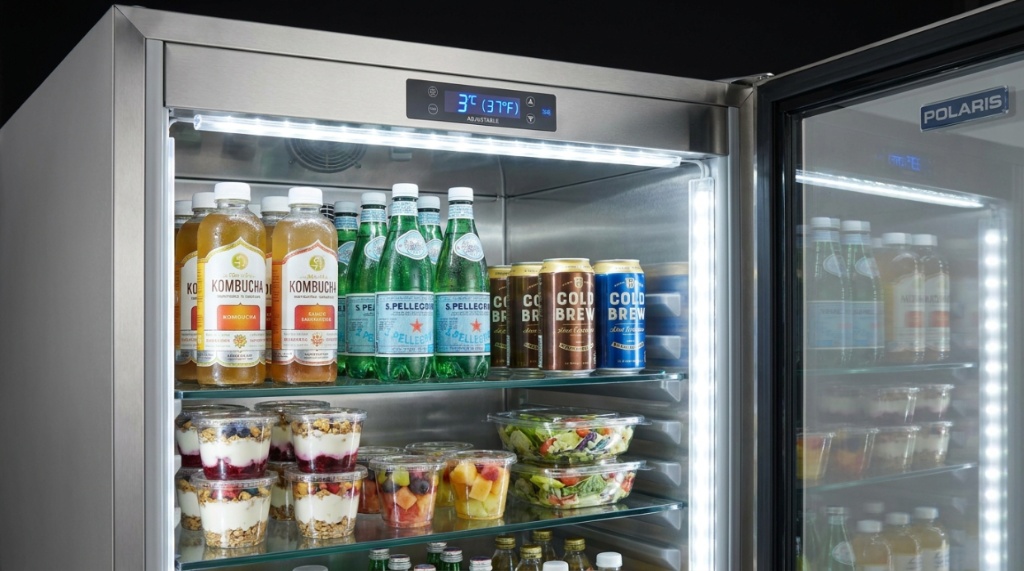
How Important Is Temperature Control for Business Refrigeration?
Accurate temperature control protects products, improves food safety, and prevents costly spoilage.
Temperature fluctuations are among the most common causes of product loss in commercial refrigeration environments. Consistent cooling is especially important for restaurants, medical clinics, bakeries, convenience stores, and office kitchens storing perishable items.
Features worth prioritizing include:
- Digital temperature displays
- Electronic thermostats
- Rapid cooling systems
- Multi-zone temperature control
- Temperature alarms
- Automatic adjustment settings
Digital systems provide significantly greater precision compared to traditional dial controls. Staff can quickly verify conditions and make adjustments when necessary.
Advanced temperature monitoring also helps businesses maintain compliance with food safety standards and internal quality-control procedures.
What Storage Features Improve Workplace Efficiency?
Flexible storage configurations help employees access items quickly while maximizing available space.
Organization directly affects productivity. A cluttered refrigerator wastes employee time and increases the likelihood of damaged or forgotten inventory.
Businesses focused on creating lasting impact often prioritize efficient systems and infrastructure, much like organizations pursuing a long-term sustainable business growth model. Smart storage design follows the same principle by improving operational performance over time.
Helpful storage features include:
- Adjustable shelving systems
- Slide-out drawers
- Dedicated beverage compartments
- Door storage bins
- Clear organizational sections
- Heavy-duty shelves
Adjustable shelves allow businesses to accommodate changing inventory needs without replacing equipment. This flexibility is particularly useful for growing companies and seasonal operations.
Should Small Businesses Invest in Smart Refrigerator Technology?
Smart refrigerator technology can reduce maintenance costs, improve monitoring, and prevent unexpected failures.
Connected business appliances are becoming increasingly common in commercial environments. Smart systems provide real-time monitoring and proactive alerts that help prevent expensive disruptions.
Popular smart features include:
- Wi-Fi connectivity
- Remote temperature monitoring
- Mobile notifications
- Performance diagnostics
- Energy usage tracking
- Predictive maintenance alerts
For example, if internal temperatures rise above acceptable thresholds overnight, managers can receive immediate alerts and respond before inventory becomes unusable.
This level of visibility helps businesses reduce losses while improving operational control.
How Does Refrigerator Size Affect Business Operations?
The right refrigerator size balances storage capacity with available workspace and energy efficiency.
Many small businesses either underestimate or overestimate their storage requirements. An oversized refrigerator wastes energy and floor space, while an undersized unit creates workflow bottlenecks.
Consider:
- Daily inventory volume
- Future growth projections
- Available floor space
- Employee usage patterns
- Peak seasonal demand
Businesses expecting growth should select models that provide moderate expansion capacity without significantly increasing operating costs.
| Business Type | Recommended Capacity | Primary Use |
|---|---|---|
| Small Office | 3–7 Cubic Feet | Employee beverages and lunches |
| Salon or Studio | 5–10 Cubic Feet | Drinks and client refreshments |
| Café or Bakery | 15–25 Cubic Feet | Ingredients and food storage |
| Medical Clinic | 5–15 Cubic Feet | Temperature-sensitive supplies |
| Retail Store | 10–20 Cubic Feet | Beverage inventory |
Why Are Durable Construction Materials Important?
Durable materials increase appliance lifespan and reduce maintenance expenses.
Business refrigerators often experience heavier use than residential units. Frequent door openings, constant loading, and daily cleaning place additional stress on components.
Look for:
- Stainless steel exteriors
- Reinforced shelving
- Commercial-grade hinges
- Corrosion-resistant finishes
- Heavy-duty door seals
Stainless steel remains one of the most popular choices because it resists wear, simplifies cleaning, and maintains a professional appearance.
Strong construction contributes significantly to long-term return on investment.
What Role Does Maintenance Play in Refrigerator Performance?
Easy maintenance improves reliability and helps preserve cooling efficiency over time.
Routine maintenance is often overlooked until performance problems appear. Refrigerators designed for easy cleaning and servicing typically experience fewer operational issues.
Useful maintenance features include:
- Removable shelves
- Accessible condenser coils
- Automatic defrost systems
- Easy-clean interior surfaces
- Replaceable door gaskets
Automatic defrost technology reduces manual labor while maintaining efficient airflow and cooling performance.
Simple maintenance procedures can significantly extend appliance lifespan while reducing repair costs.

Are Noise Levels Important in Office Environments?
Quiet operation contributes to employee comfort and workplace productivity.
Noise may seem insignificant during purchasing decisions, but constant compressor sounds can become distracting in offices, meeting rooms, and client-facing environments.
Features that reduce noise include:
- Variable-speed compressors
- Enhanced insulation
- Noise-reduction technology
- Vibration control systems
For professional workspaces, low-noise operation should be considered alongside energy efficiency and storage requirements.
What Security Features Should Business Owners Consider?
Security features help protect inventory, sensitive products, and company resources.
Businesses storing medications, specialty ingredients, premium beverages, or confidential materials may require additional protection.
Recommended security features include:
- Lockable doors
- Access control systems
- Audit logs
- Tamper alerts
- Remote monitoring capabilities
Even basic locking mechanisms can prevent unauthorized access and reduce inventory shrinkage.
Which Small Office Refrigerator Options Offer the Best Overall Value?
The best value refrigerators combine efficiency, reliability, flexibility, and manageable ownership costs.
Small offices typically benefit most from compact or mid-sized refrigerators that prioritize energy efficiency and organizational features.
If you’re evaluating practical workplace refrigeration options, this detailed guide to small office refrigerator solutions for modern workspaces provides useful insights into selecting models that balance capacity, convenience, and cost-effectiveness.
The ideal solution depends on employee count, available space, storage requirements, and future business growth plans.
Conclusion: Which Refrigerator Features Deliver the Greatest Business Value?
The best refrigerator features small business owners should look for are energy efficiency, accurate temperature control, flexible storage, durability, smart monitoring, easy maintenance, and reliable security.
These features directly affect operating costs, inventory protection, employee productivity, and long-term equipment performance. Investing in quality business appliances reduces downtime, lowers utility expenses, and supports smoother day-to-day operations.
As businesses grow, operational efficiency becomes increasingly important. Whether you’re optimizing workplace infrastructure, improving office cooling solutions, or expanding company resources, informed purchasing decisions create lasting value. For additional insights into building efficient business systems and sustainable growth strategies, explore resources on developing resilient long-term business models.
Before making a purchase, evaluate your current needs, expected growth, storage requirements, and operating budget. The right refrigerator is not simply a cooling device—it is a strategic investment that supports business performance every day.
Frequently Asked Questions
What is the most important refrigerator feature for a small business?
Energy efficiency is often the most important feature because it directly impacts monthly operating costs. Efficient compressors, quality insulation, and ENERGY STAR-certified models help reduce electricity expenses while maintaining reliable cooling performance.
How large should a refrigerator be for a small office?
Most small offices benefit from refrigerators between 3 and 7 cubic feet. The ideal size depends on employee count, food storage requirements, and available workspace.
Are smart refrigerators worth the investment for businesses?
Yes, smart refrigerators can provide valuable monitoring and maintenance benefits. Features such as remote alerts and temperature tracking help prevent spoilage and reduce unexpected equipment failures.
How often should a business refrigerator be maintained?
Basic maintenance should be performed monthly, with professional inspections conducted annually. Regular cleaning and coil maintenance help preserve efficiency and extend equipment lifespan.
Why is temperature consistency important?
Consistent temperatures protect products and maintain quality standards. Temperature fluctuations can lead to spoilage, compliance issues, and financial losses.
What materials are best for commercial refrigerator durability?
Stainless steel is widely considered the best option for durability and easy maintenance. It resists corrosion, handles heavy use, and maintains a professional appearance.
Do office refrigerators need security features?
Many businesses benefit from lockable doors and access controls. These features help protect inventory, reduce unauthorized access, and support accountability.